

US $0.15 - US $0.45 / pieces
The Advantages Of Using RFID Hang Tag To Cloth
* Have accurate uniform inventory information in real-time.
* Monitor the sales performance and Tracking clothes sent to which store
* Prevents unnecessary uniform purchases
* Employee Uniform Dispensing and Collection information
* Discover market needs .
* Quick finding cloth at your stock room/warehouse
* Uniform Rental Features
* Multi-Stock – multiple uniform stock can be managed from one system

RFID performance | |
Protocol | EPC global UHF Class 1 Gen 2 / ISO 18000-6C |
Working frequency | 902-928Mhz or 865-868Mhz, or customized |
Chip | Ucode 7M |
Chip memory | M4QT: EPC 96bits User: 32bit |
Data storage | 20 years |
Tag’s warranty | 2 years or 200 washing times |
Antenna polarization | Linear polarization |
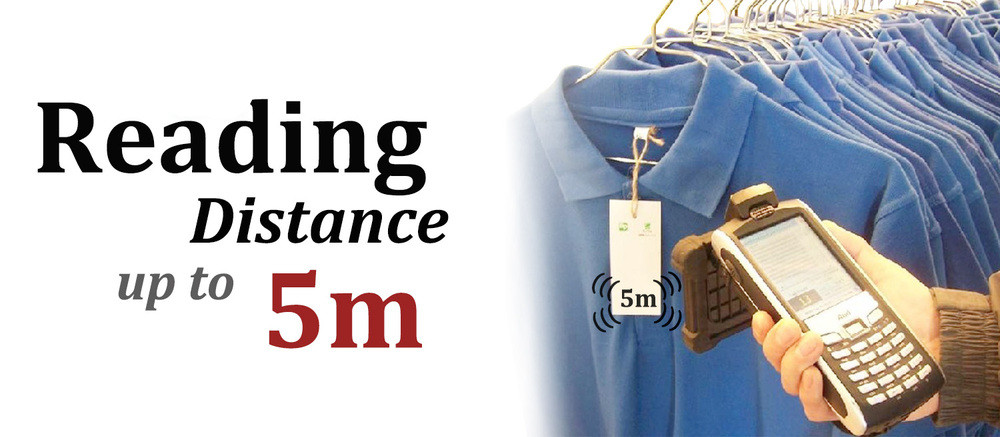
Reading distance (on metal surface ) based on field testing | Fix reader (4w EIRP, Alien9900) : over 4m |
Handheld reader (Alien9011) : over 2m | |
Physical performance | |
Main material | Textile |
Surface color | white |
Size | 70mm * 15mm *1.5mm (or customized) |
Operating Temperature | -25~+110℃ |
Storage Temperature | -30~+85℃ |
Storage humidity | 5%-95% |
Short term heat resistance | Washing - 90℃, 15 minutes Ironer - 190℃, 12 seconds Pre-drying -180℃, 20 minutes Sterilization - 135℃, 20 minutes |
pressure | 60 Bar atmospheric |
Install terms | suture installed or 200℃ / 10 seconds Blanching installed |
Unit weight | 0.7g/pcs |
Testing | |
Drop test | 1 meter high 200 drops test passed |
Gasoline test | No. 92 gasoline wiped passed |
High and low temperature alternating test | -40℃to +120℃,7 times high and low temperature alternating cycle, 2 days consecutive, test passed |
ROSH | passed |
Laundry tests | passed |

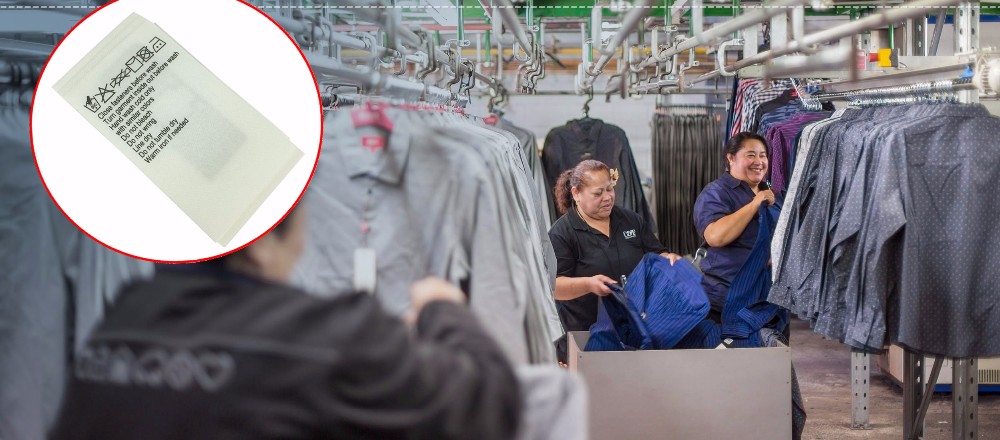
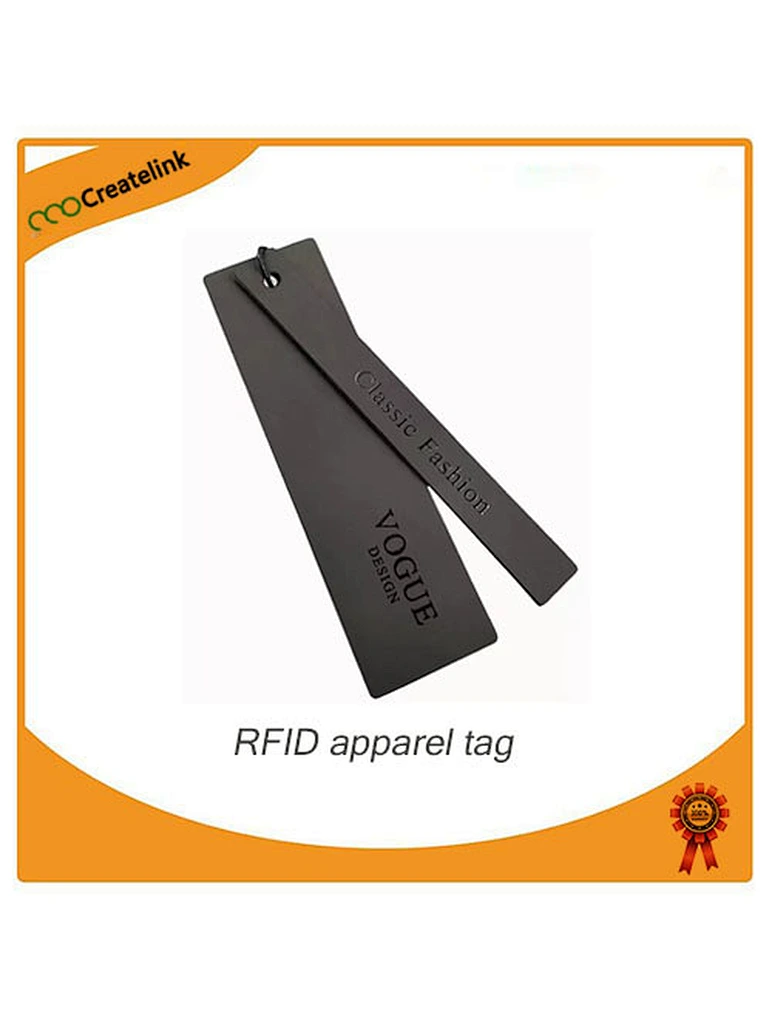
The RFID hang tag for clothes is widely used in retail industry, expecialy used for apparel/garment/cloth management and shoes management. We provide RFID adhesive label, RFID hang tag, RFID woven/textile/fabric tag, etc.
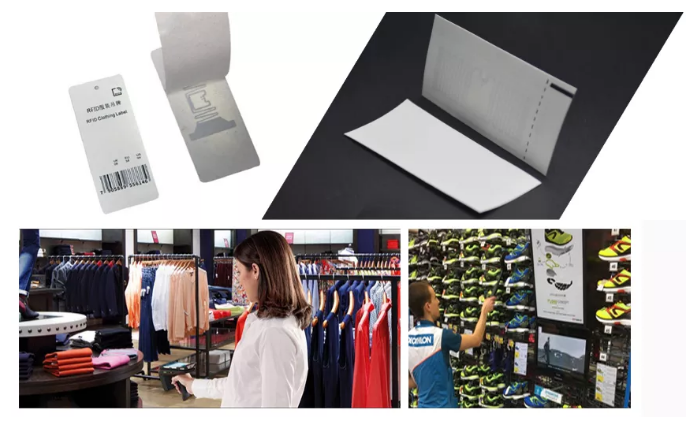


 Advantage of RFID UHF garment tags:
1. Enable fast scanning and reading of products
2. Real-time monitoring of products from raw materials to semi-finished products, finished products, transportation, warehousing, distribution, shelves, sales, and even return processing
3. Establish a safe and reliable management model
4. Help companies achieve a low-cost and efficient supply chain operation system